Directors
Thomas Blom
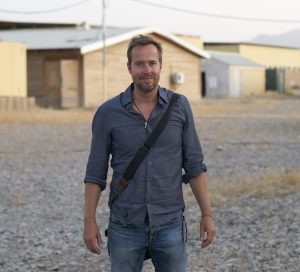
Misha Wessel
Thomas Blom (Breda, 1970) graduated with honors from the audiovisual department of the St. Joost Academy. As a freelance director, he created, among others, “Stadium Disaster Moscow” for ESPN, which exposed the largest football disaster in history, and two documentaries for the series “Deported” about deported asylum-seeking children, which was awarded the Clara Meijer-Wichmann Medal.
Blom has also worked on programs such as Andere Tijden, Zembla, and Andere Tijden Sport. His broadcast “Shell’s Dirty Oil” led to a unique parliamentary hearing in the Dutch House of Representatives. In addition to several nominations, Blom won the investigative journalism award De Loep for “Hostage-taking in Almelo”, and the Herman Kuiphof Award—given for the best sports documentary of the past five years—for “The Mystery of Foekje Dillema”, in which a DNA test demonstrated that runner Foekje Dillema was indeed a woman.
In recent years, Blom has focused on independent documentaries and series. For BNNVARA, he directed the three-part series “The Arab Storm”, which examined how the Arab Spring evolved into an Arab storm. For this, he traveled to countries including Iraq, Syria, and Libya. The widely viewed series “Beyond the Borders of Saudi Arabia” with Sinan Can was nominated for both the Nipkow Disk and De Tegel.
In 2019, he made “The World of Thinking”, about five brilliant scientists in Princeton searching for a revolutionary breakthrough. The film was nominated, among other honors, for Best European Science Documentary at the Silbersalz Film Festival. His documentary “The Hunt for Gaddafi’s Billions” was broadcast by BBC Storyville. The film won a prestigious Rockie Award at the BANFF Media Festival and was nominated for an Emmy (Current Affairs).
The three-part international series “Free at Last” (2025), about the aftermath of Apartheid, was broadcast in countries including Germany, France, Scandinavia, and South Africa, and received a prestigious Prix Italia.
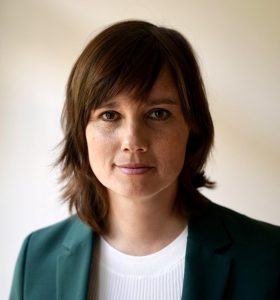
Misha Wessel (Velsen, 1982) completed a Master’s degree in Journalism at the University of Amsterdam after studying Dutch. She then worked as a researcher and editor for various documentaries for NOS Sport, Andere Tijden Sport, and Holland Sport.
In 2013, she introduced a new tradition of political biographies for public broadcasting: the prime minister portrait. Together with Thomas Blom, she conceived and directed the documentary “The Secret of Lubbers”, followed in 2015 by the two-part series “The Struggle of Kok.” Their third prime minister portrait, “The Storm of Balkenende,” is set to be released at the end of 2025.
They also created “The Laws of Cees Priem”, in which, after sixteen years, they revealed for the first time who was behind the 1998 doping transport that led to team manager Cees Priem being imprisoned in France. With over one million viewers, the documentary was nominated for the journalism award De Tegel. An interview with doping doctor Peter Janssen, which she co-wrote with Blom for de Volkskrant, was also nominated for De Tegel.
In 2018, she made the documentary “The World of Thinking.” The film received nominations for Best European Science Documentary at the Silbersalz Film Festival and for the Grand Prize at the Academia Film Festival Olomouc in the Czech Republic.
Her documentary “The Hunt for Gaddafi’s Billions” was broadcast by BBC Storyville and sold to more than 25 countries. The film won a prestigious Rockie Award at the BANFF Media Festival and was nominated for an Emmy (Current Affairs).
The three-part international series “Free at Last” (2025), about the aftermath of Apartheid, was shown in countries including Germany, France, Scandinavia, and South Africa, and received the South African National Arts and Culture Award as well as a prestigious Prix Italia.